



Retail Accelerates AI Adoption: A Key Trend to Optimize Operations and Enhance Customer Experience
13/01/2026
As the retail market becomes increasingly competitive, consumer behavior evolves rapidly, and operating costs continue to rise, Artificial Intelligence (AI) is emerging as a critical tool for retailers to optimize operations, drive revenue growth, and enhance customer experience. From large retail chains to medium-sized and smaller stores, AI is no longer an experimental technology—it has entered the stage of real-world deployment.
How is AI being applied in the retail industry?
1. AI for in-store customer behavior analytics
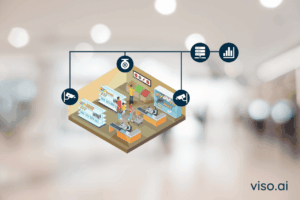
One of the most common AI applications in retail is customer behavior analysis through AI-powered cameras and video analytics systems.
AI enables retailers to:
- Count customer footfall in real time
- Analyze dwell time at specific shelves or zones
- Identify common customer movement paths
- Evaluate the effectiveness of product displays
With these insights, retailers can optimize store layouts, improve product placement, and increase conversion rates.
2. AI in inventory management and supply chain optimization
Inventory management remains a major challenge in retail. When integrated into management systems, AI helps retailers:
- Forecast demand based on historical sales data
- Detect early risks of stockouts or overstock
- Optimize replenishment and distribution plans
- Reduce losses and data discrepancies
By applying AI, retailers can lower storage costs, minimize inefficient inventory, and ensure product availability when customers need it.
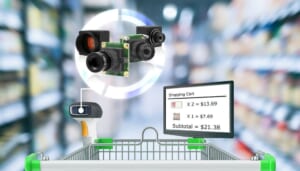
3. AI in payment and sales automation
AI is transforming the checkout experience at points of sale:
- Cashierless stores
- Automated payment via facial recognition or QR codes
- Smart POS and self-service kiosks powered by AI
These solutions help retailers:
- Reduce checkout waiting times
- Lower labor costs
- Deliver fast, convenient, and contactless shopping experiences

4. AI-powered loss prevention and fraud detection
Retail shrinkage and theft remain persistent challenges. AI is increasingly used to:
- Detect abnormal behaviors via AI-enabled cameras
- Identify potential theft or fraudulent activities
- Monitor high-risk areas within stores
Compared to manual surveillance, AI allows for faster response times, higher accuracy, and reduced reliance on human monitoring.
5. Personalizing customer experience with AI
AI enables retailers to:
- Segment customers based on purchasing behavior
- Recommend products tailored to individual preferences
- Personalize promotions and marketing campaigns
Personalization driven by AI helps increase customer satisfaction, improve retention rates, and build long-term customer relationships.

How should retailers start adopting AI?
Experts suggest that retailers do not need to deploy AI across all operations at once. A practical roadmap typically includes:
-
Starting with clear, high-impact use cases (footfall counting, loss prevention, inventory optimization)
-
Running pilot deployments in selected stores
-
Evaluating results, optimizing solutions, and scaling up
-
Integrating AI solutions with existing systems (POS, ERP, CRM)
This phased approach helps reduce risk and ensures that AI investments deliver tangible value.
AI is becoming a key driver of digital transformation in the retail industry. The adoption of AI-powered products not only helps retailers optimize operations and reduce costs, but also significantly enhances customer experience in an increasingly competitive environment.
In the near future, retailers that adopt AI early and implement it strategically will gain a clear advantage in scaling their operations, increasing revenue, and building smarter, more agile retail models.

Solve any questions from you
Connect with the VTI Commerce team to experience the best products and services.
Contact now