



AI Cameras and RFID Are Transforming Warehouse Operations
16/03/2026
As e-commerce and global supply chains continue to grow rapidly, businesses are facing increasing pressure to manage warehouses efficiently and accurately. Traditional warehouse management methods that rely heavily on manual processes often lead to issues such as inventory discrepancies, misplaced goods, and time-consuming stock checks.
The combination of AI, IoT, and intelligent hardware devices is creating a new operational model known as the Smart Warehouse. In this model, two key technology solutions are playing a critical role:
-
AI cameras for warehouse monitoring and operational analytics
-
RFID systems for inventory tracking and asset management
These technologies allow businesses to transition from manual processes to data-driven warehouse management with near real-time visibility.
1. AI Cameras – The “Smart Eyes” of the Warehouse
In modern warehouses, cameras are no longer used solely for security monitoring. With AI technology, they have become powerful tools for operational analysis and process optimization.
How AI camera systems work
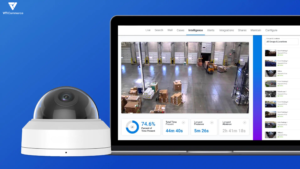
AI cameras use computer vision and machine learning algorithms to analyze video streams in real time. Instead of simply recording footage, these systems can:
-
detect people, vehicles, and objects
-
track movement patterns
-
identify abnormal activities
-
analyze operational efficiency.
Components of an AI camera system
A typical AI-based warehouse monitoring system includes:
-
Industrial AI cameras
-
AI Edge Box or AI Gateway for local data processing
-
Video storage and analytics servers
-
Video Management Software (VMS).
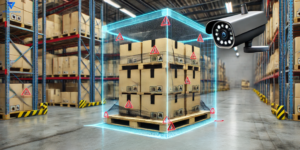
Practical applications in warehouse operations
AI camera systems support multiple operational scenarios.
Monitoring inbound and outbound areas
The system can automatically monitor receiving and shipping areas and help verify operations against warehouse management data.
Detecting process violations
For example:
-
goods placed in the wrong zone
-
pallets left unattended
-
forklifts moving outside designated routes.
Analyzing operational performance
AI can measure:
-
order processing time
-
activity levels across different warehouse zones
-
workforce distribution and movement.
These insights help managers optimize warehouse layout and improve operational productivity.
Discover AI Camera solutions here
2. RFID – The Core Technology for Smart Inventory Management
While AI cameras monitor activities, RFID plays a central role in tracking goods and managing inventory.
How RFID works
RFID uses radio waves to identify tags attached to products or pallets. Each RFID tag contains a unique identifier that allows the system to determine exactly which item is being tracked.
A typical RFID warehouse system includes:
-
RFID tags attached to products or pallets
-
Handheld RFID readers for inventory checking
-
RFID gate readers installed at warehouse entry and exit points
-
RFID printers for tag printing and encoding
-
RFID data management software.
Faster inventory counting
In warehouses using QR codes or barcodes, employees must scan items one by one.
With RFID technology, readers can detect dozens or even hundreds of tags within seconds, dramatically accelerating inventory processes.
Real-time tracking of goods
RFID systems can record:
-
when goods enter the warehouse
-
pallet locations within the facility
-
when goods leave the warehouse
-
the movement history of each item.
This ensures that warehouse systems always maintain accurate, real-time inventory data.
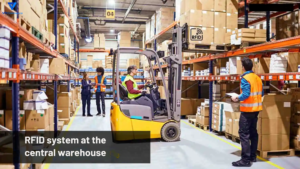
3. Combining AI Cameras and RFID to Build Smart Warehouses
In many modern logistics projects, companies are integrating AI cameras, RFID systems, and Warehouse Management Systems (WMS) to create fully digitalized smart warehouses.
This integrated approach provides multiple advantages:
-
faster automated inventory processes
-
reduced stock discrepancies
-
improved warehouse security
-
optimized internal logistics flow.
In addition, data collected from these technologies can be integrated with ERP or supply chain management systems, allowing businesses to manage their logistics operations more efficiently and transparently.
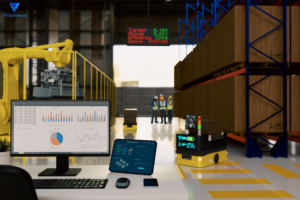
AI cameras and RFID technologies are becoming essential tools for companies transitioning toward smart warehouse operations. When deployed together with warehouse management software, these solutions not only reduce operational costs but also significantly improve accuracy and efficiency in handling goods.
As supply chains grow increasingly complex, investing in AI- and IoT-driven warehouse technologies will help businesses strengthen competitiveness and prepare for the next generation of intelligent logistics systems.



Solve any questions from you
Connect with the VTI Commerce team to experience the best products and services.
Contact now